Home battery backup
Energy Storage and Backup Power
Keep your home powered when the grid goes down. Home battery systems store excess daytime solar energy for the evening and provide backup power for essentials like lights, your fridge and internet during an outage. These systems integrate seamlessly with your home’s electrical system, providing reliable energy storage and backup power.
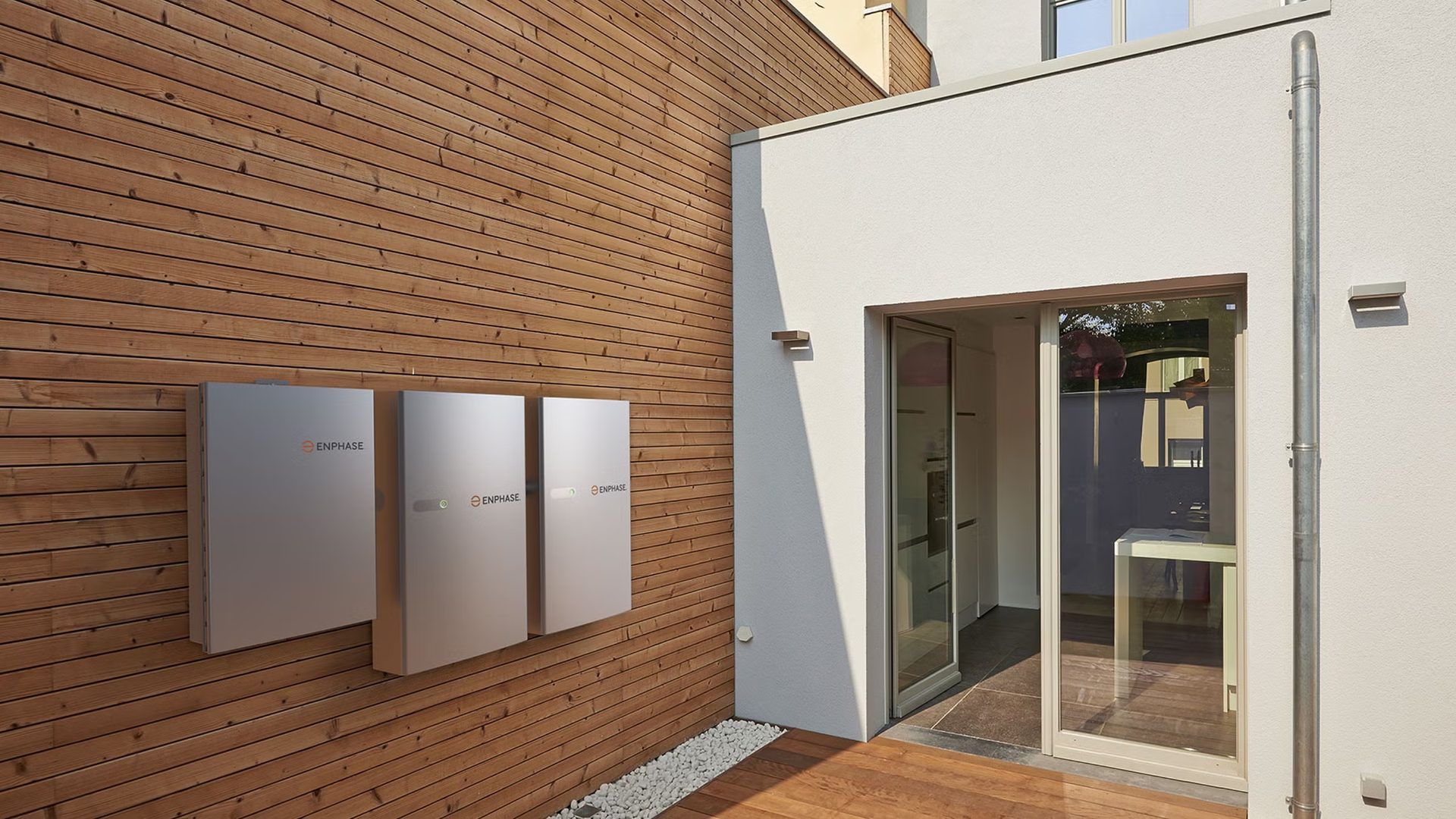
Backup for outages
Selected circuits connect to a critical loads panel and automatically switch to battery power the moment the grid goes down.
Solar storage
Daytime production charges the battery; the house runs on it after dark, or during peak hours.
Load planning
Which circuits should remain on? How long will they last? This determines the required battery size. Fridge, lights and internet, heat pump usually come first.
Retrofit or new
A battery can most likely be added to an existing solar array or installed on its own. Upgrade your old lead-acid to Lithium for greater use.
Generator integration
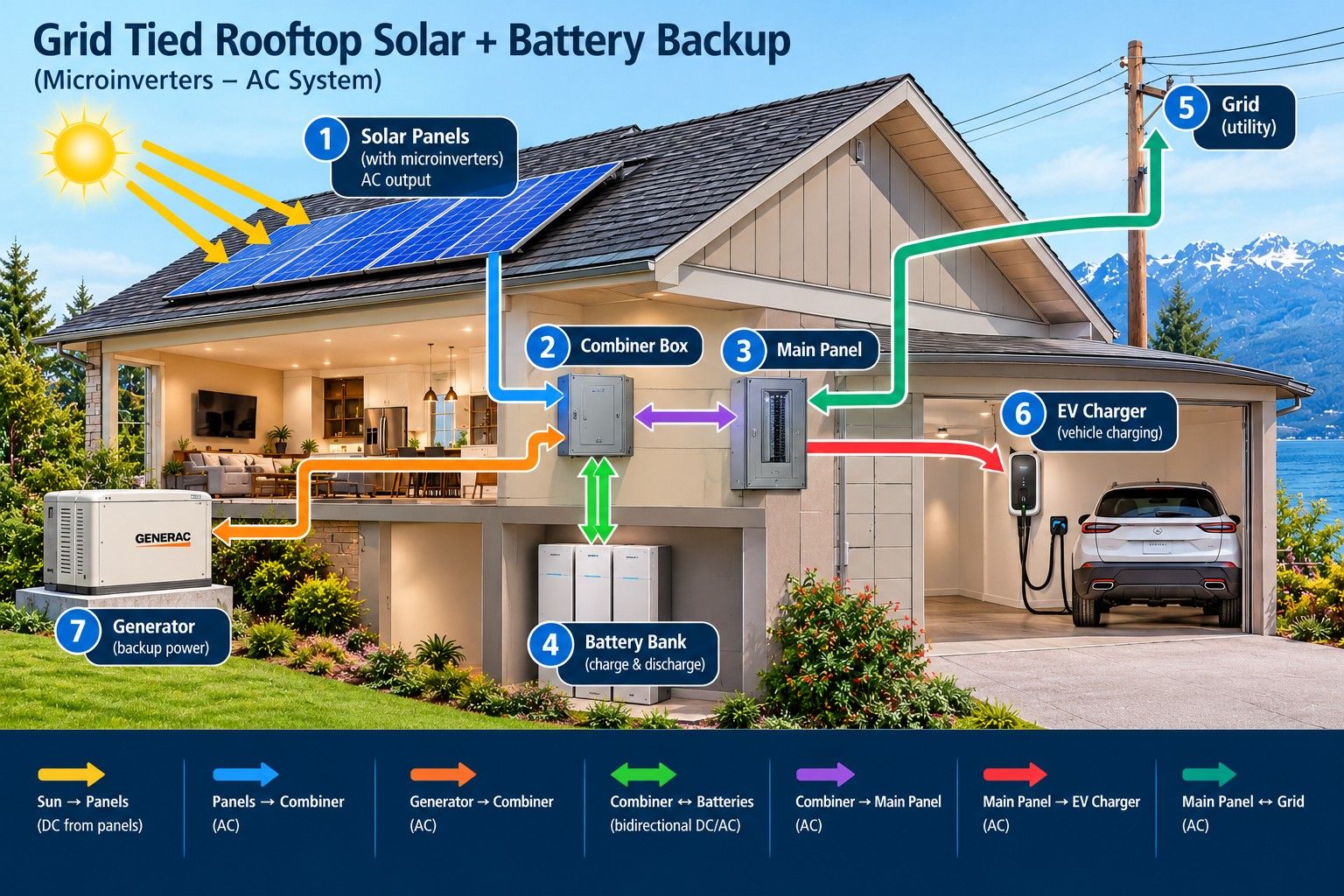
If you already have a generator, certain systems can be set up to recharge the battery instead of running all night.
Permits
All required electrical permits and inspections are included, ensuring your installation meets applicable electrical code and safety requirements.
How it fits together
How a home battery backup system works
A home battery system works alongside your electrical panel and solar system to keep essential parts of your home powered when the grid goes down.
Selected circuits connect to a critical loads panel, supplied by the battery system. When there's a power outage, the system automatically isolates your home from the grid and switches to battery power, keeping your essential circuits running with minimal interruption.
Every home is different. We design the backup system around your needs, choosing which circuits to keep running during an outage. Common priorities include heating, refrigeration, well pumps, internet and lighting. Larger loads like electric ranges and dryers are typically left off the backup panel to maximize your available battery capacity.
Clear from the first call
How a job goes
Call or write
Say what you need, where the property is, and anything you already know about the panel or access. Photos help.
Site visit and quote
Mitch looks at the panel, the roof or the space, and what the house actually runs. The quote says what the work includes before it starts.
Permit and install
Permits are pulled where the work needs one. The install is scheduled around ferries and the jobs already booked.
Inspection and handover
The work is inspected where required, then walked through with you: what was done, where the shutoffs are, how to read the app if there is one.
How long will a home battery run the house in an outage?
It depends on the size of the battery and what you ask it to run. Carrying a fridge, lights, internet and a furnace fan is very different from carrying a heat pump and a range. The design starts by deciding which loads matter.
Do I need solar to have a battery?
No. A battery on its own charges from the grid and carries the house through an outage. Solar adds the ability to recharge while the grid is still down, which matters most for multi-day outages.
Is a battery better than a generator?
They do different jobs. A battery is silent, automatic and needs no fuel, and is the right answer for most short and medium outages. A generator can run indefinitely with fuel. Many coastal homes end up with a battery first and a generator as the long-outage backup.